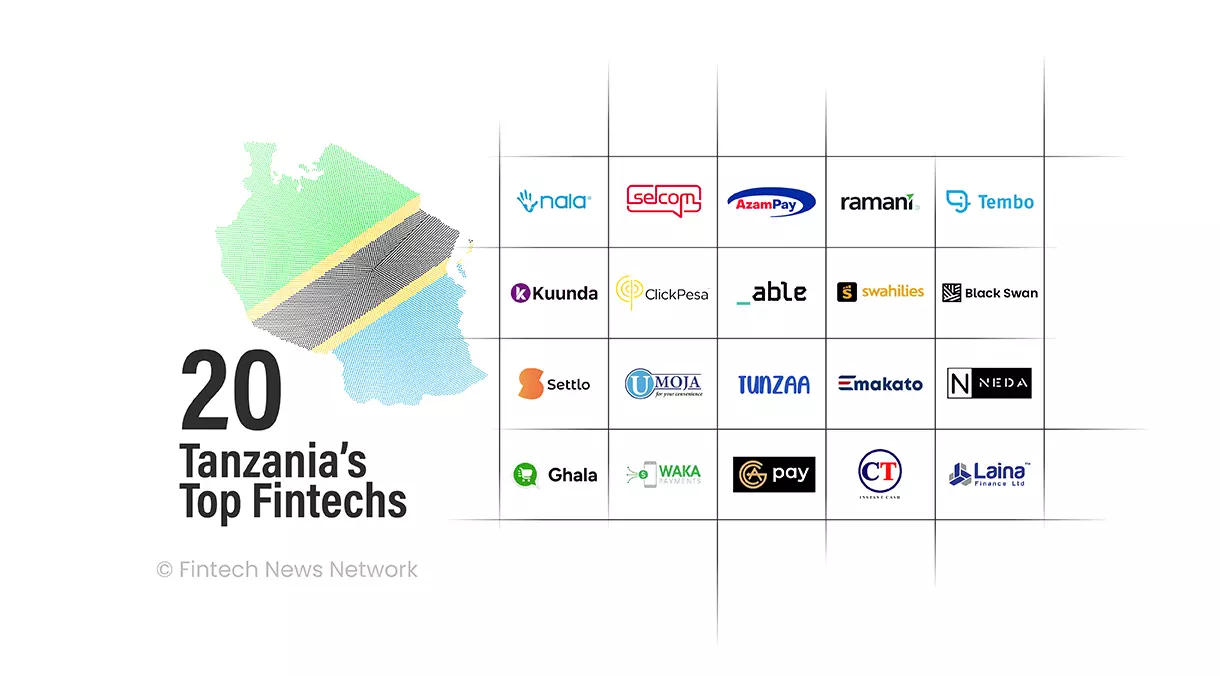




First, I asked Linkedin for names to be added to the top 20, Tanzania’s fintech story is usually told through mobile money.
That is understandable. Mobile money changed the country. It brought millions of people into the formal financial system, made everyday payments easier, and created the rails for a more digital economy led by lending, betting and merchants payments.
The rest of the chapters in this book are being written by independent fintech companies building payments infrastructure, merchant tools, embedded finance, cross-border payments, credit scoring, switching, stablecoins, business payments, SME operating systems, recurring collections, digital lending and financial APIs.
I must warn you that This article is not a list of every fintech product operating in Tanzania. It is a list of independent, Tanzania led, Tanzania first fintech companies. That means M-Pesa, AirtelMoney, PalmPay and SasaPay are excluded by design. Not because they are unimportant. They’re very important but my goal was to create space to showcase what I consider to be truly “Tanzania’s Fintech”.
The left outs giants played a huge role in expanding financial access. Their exclusion is simply a matter of scope. Because this article is focused on a different question:
Which fintech companies are being built from Tanzania (eg Ramani, Tembo, Selcom) or got their first meaningful crack of the market in Tanzania (eg Nala, Kuunda), not simply which fintech products operate in Tanzania?
The answer is more interesting than many people think. Tanzania now has fintech companies working across remittances, payment gateways, merchant systems, SME finance, switching, liquidity, stablecoins, direct debit, cross-border payments, credit scoring, consumer finance and digital commerce infrastructure.
Tanzanian Top fintechs are backed by a mix of local and global investors, including Hustle Fund, Y Combinator, DeveloPPP and Warioba Ventures. Together, they are helping turn a fintech adoption market into a fintech -building market.
The Top Twenters show that Tanzania’s fintech is no longer just about using technology built elsewhere. It is increasingly about building the technology ourselves.
Here is the list of Tanzania’s Top 20 Fintechs as curated by Reuben Mwatosya of Cofounders Notebook and His Linkedin Community.
1. NALA
NALA is Tanzania’s most globally recognised fintech. What began as a Tanzanian-born remittance company has grown into an international payments business serving Africans across the UK, US, Europe and multiple African markets. Its consumer product helps the diaspora send money home, while its broader infrastructure play, Rafiki, points to a bigger ambition: building payment rails for emerging markets.
NALA matters because it has changed what Tanzanian startups believe is possible.It has shown that a company with Tanzanian roots can raise serious international capital, build for global markets and compete in one of the hardest categories in fintech: cross-border payments.
Its focus area is clear: remittances, cross-border payments and international payment infrastructure. For Tanzania, NALA is more than a fintech success story. It is a signal that locally rooted companies can build for the world.
2. Selcom
Selcom is one of Tanzania’s original fintech infrastructure companies.Long before fintech became a fashionable word, Selcom was already helping businesses, banks, billers, agents and merchants process digital payments. Its infrastructure has supported bill payments, merchant payments, agency banking, collections, disbursements and integrations across the financial ecosystem.
Selcom’s importance is not just that it exists. It is that it has endured and carried every bank, mobile money and many fintechs that came after. In a market where many fintech startups come and go, Selcom has remained at the centre of Tanzania’s digital payments backbone for years, and it powered switching for years before the national switch.
Its focus area is payments infrastructure, merchant services, collections and digital transaction processing. Infrastructure is rarely glamorous, but it is foundational. That is why Selcom belongs near the top of this list.
3. AzamPay
Unlike many VC backed startups, AzamPay is backed by the Bakhresa ecosystem, AzamPay serves businesses that need reliable ways to collect payments, automate transactions, reconcile collections and connect to digital payment channels.
They are the only non telco mobile money operator and Its importance comes from execution at a complex scale of a conglomerate. Tanzania’s business economy is still heavily cash-based. Companies that make digital payments easier for merchants, corporates and institutions are central to the country’s next financial transformation.
AzamPay’s focus area is merchant payments, mobile money and digital commerce infrastructure. Its profile has also moved beyond Tanzania, with global recognition helping position it as one of the country’s most visible payment infrastructure companies.
4. Ramani
Ramani sits at the intersection of supply chain, data and embedded finance. The company digitises micro-distribution and consumer goods supply chains, helping distributors, brands and merchants understand sales, inventory and cash flow more clearly. That operating data can then become the foundation for credit and working capital.
Ramani is important because it shows one of the most powerful directions in African fintech: finance embedded inside real trade. Instead of asking small businesses to walk into a bank with limited records, Ramani helps create the records first.
That makes merchants more visible, more measurable and more financeable. Its focus area is supply-chain finance, merchant data, working capital and embedded finance.
5. Tembo
TemboPlus is building payment and banking infrastructure for businesses. Its API-led model helps companies embed financial services into their own products. That includes payments, collections, wallets, accounts, mobile money integrations, remittances and other financial infrastructure.
TemboPlus matters because the next wave of fintech will not only be about standalone consumer apps. It will also be about infrastructure that allows other companies to launch financial services faster.
Every marketplace, logistics company, lender, merchant system, school platform, subscription company or enterprise software product may eventually need embedded payments or financial features. Tembo is building for that world.
6. Kuunda
Kuunda is one of the most important embedded liquidity fintechs linked to Tanzania biggest credit product (Songesha on Mpesa). Its model focuses on short-term liquidity products such as mobile money float loans, airtime float, merchant cash advances, stock financing and working-capital solutions.
These products solve a very real problem in African commerce: agents and merchants often lose transactions because they run out of float or working capital.Kuunda’s strength is that it embeds credit where transactions already happen.
Rather than forcing customers into a separate lending journey, it places liquidity inside the platforms and channels merchants already use.
7. ClickPesa
Probably the second oldest Fintech after Selcom, ClickPesa is a business payments platform focused on helping companies manage payments more efficiently, plus they were very early in crypto and issued the first TZS stablecoin on stellar.
Its core products serve SMEs, corporates, MFIs and organisations that need to handle collections, payouts, payment automation and reconciliation across multiple channels.
ClickPesa belongs on this list because business payments are still one of the least glamorous but most important they write about the challenges and opportunities
8. Credable
With strong partnership w DTB, Airtel and Vodacom, Credable is an embedded finance and digital banking infrastructure company with strong Tanzanian roots.
It works with banks, telecoms and businesses to launch credit and savings products through existing customer channels. Credable matters because distribution is one of the hardest problems in financial services.
Instead of trying to acquire every customer directly, Credable enables institutions and platforms that already have customers to offer financial products. Its focus area is embedded finance, digital banking infrastructure and credit enablement.
9. Swahilies
Swahilies is one of the strongest SME-focused fintech companies in Tanzania. It provides a financial operating system for small businesses, combining tools for inventory, sales, payments, analytics and business operations.
Its focus on SMEs is important because Tanzania’s economy is built on small and informal businesses that often lack clean records, structured payment histories and access to formal finance.
Swahilies matters because SME digitisation is a fintech problem NOT a software problem. Once a small business has digital records, it becomes easier to offer payments, working capital, savings, insurance and other financial services.
Its focus area is SME operating systems, business management, payments and merchant data. Swahilies is more than a business tool. It is part of the data layer for SME finance including cross border payments, credit and local payments.
10. Black Swan
Black Swan is an AI-driven fintech focused on alternative credit scoring and financial inclusion recently recognised by Bloomberg.
Its work is important because Tanzania, like many African markets, still has a major credit information gap. Many individuals and small businesses are economically active but invisible to traditional lenders because they lack formal credit histories.
Black Swan addresses that gap by using alternative data and AI-driven scoring to help lenders understand risk more effectively.
Its momentum has also received continental recognition, with Black Swan named among African startups to watch. Its focus area is alternative credit scoring, consent-based financial data sharing, lending intelligence and financial inclusion.
12. UmojaSwitch (UBX)
UmojaSwitch is one of Tanzania’s most important financial infrastructure players. It provides shared electronic payment and fund-transfer infrastructure that connects banks and other financial-service providers. Its role may not be as visible as a consumer app, but it is deeply important.
A financial ecosystem needs switches, rails and interoperability. Without those layers, banks, merchants, ATMs, cards and providers cannot connect efficiently.
Its focus area is switching, interoperability, payment infrastructure and financial connectivity. UmojaSwitch belongs on this list because fintech is not only about the companies users see. It is also about the infrastructure that makes transactions possible behind the scenes.
13. Tunzaa
Tunzaa sits in the consumer finance and save-to-buy category. Its model helps customers plan purchases, save toward products and access goods in a more structured way. This matters because many consumers cannot afford large purchases upfront, but also do not want to fall into irresponsible debt. The save-now-buy-later model is an important alternative to pure lending.
Tunzaa’s focus area is consumer finance, structured savings, affordability and commerce. It belongs on this list because Tanzania needs more fintech products that help people plan, save and buy responsibly.In markets with irregular income, affordability is not just about credit. It is also about discipline, timing and structure.
14. SoloCodes / Emakato
Cofounded and led by the cofounder of Laina Finance, SoloCodes is building E-makato, a direct debit solution for recurring subscriber and utility payments.
This is an important fintech category because many businesses in Tanzania still struggle with recurring collections. Subscriptions, school fees, insurance premiums, rent, utilities, loan repayments and service bills often depend on manual follow-ups, mobile money prompts or irregular customer-initiated payments.
E-makato addresses that gap by helping businesses collect recurring payments more predictably. Direct debit infrastructure may not sound as exciting as consumer apps or remittances, but it is one of the last missing layers in Tanzania’s payment ecosystem.
15. NEDA Labs / nTZS
The company is building nTZS, a Tanzanian shilling-pegged stablecoin. This places it at the frontier of controlled experimentation with blockchain-based payments and digital assets in the country.
In emerging markets, regulated digital money could potentially support faster settlement, programmable payments, cross-border and new financial infrastructure.
NEDA Labs belongs on this list because it is pushing the boundary of what fintech regulation and innovation can look like, that is bigger than stablecoin as a category.
16. Ghala by Neurotech
Its inclusion matters because Tanzania’s fintech ecosystem is no longer limited to payment gateways and mobile money integrations. The ecosystem is beginning to include more advanced infrastructure, regulated experimentation and technology products that can support financial services in new ways.
Ghala’s focus area is financial infrastructure, sandbox innovation and digital financial technology. The significance of products like Ghala is not only what they do today. It is what they signal. They show that founders are beginning to build for regulated financial innovation from the start, not as an afterthought. That is a healthy sign for the market.
17. WakaPay
WakaPay is an outward cross-border payments platform focused on helping users and businesses make payments across African markets.
Its model is especially relevant because Tanzania is deeply connected to regional trade, diaspora movement and cross-border commerce. Tanzanian users, Kenyan merchants, regional traders and mobile money users often need faster and simpler ways to move value across borders.
WakaPay’s focus area is cross-border mobile money, merchant payments and intra-African trade. This is one of the biggest opportunities in African fintech. Trade already moves across borders. People already move across borders. Families already move money across borders.
18. GCA Pay
Recently licensed GCA Pay is one of the Old fintech companies in Tanzania by volumes and value they handle. Built under Goldcavern Associates, it sits at the intersection of FX, cross-border settlement and business financial infrastructure.
Its positioning is important because Tanzania is increasingly becoming a settlement and trade corridor market, especially for businesses moving money between Africa, Asia and other global markets. Companies do not only need payment collection. They need liquidity, compliance, FX, reconciliation and reliable settlement across multiple rails.
Its focus area is cross-border payments, treasury, FX, supplier payments, collections, payouts and business settlement infrastructure. GCA Pay is more than a payment gateway. It is part of the infrastructure layer for African trade, stablecoin-powered settlement and regional business payments.
19. CashMe Tanzania
Powered by crowdfunding, CashMe Tanzania represents the digital credit and short-term finance side of the ecosystem. Credit remains one of the biggest gaps in Tanzania’s financial system. Many people and small businesses need access to fast, flexible and responsible financing, but traditional channels can be slow, paperwork-heavy or inaccessible.
CashMe Tanzania’s focus area is digital lending and crowdfunding which is niche but interesting enough to showcase what is possible at scale. Digital lending can create real value when it is transparent, fair and responsible.
20. Laina Finance
Probably the OG of smartphone lending in Tanzania, Laina Finance focuses on digital lending and flexible financing for Tanzanian consumers and businesses.
Its inclusion is important because credit access remains one of the biggest gaps in Tanzania’s financial system and Laina was one of the pioneers in the space. Laina represents the digital credit layer of the ecosystem. Its focus area is digital lending, instalment finance and flexible consumer or business financing.
This category is central to fintech because payments alone do not solve financial inclusion. People and businesses also need better ways to access capital, smooth income gaps and finance useful assets.
What This List Tells Us
Tanzania’s fintech ecosystem is not yet as large or globally visible as Kenya or South Africa. But it is more interesting than many people realise. This list shows a market moving beyond the first layer of mobile money into a broader fintech stack:
Remittances, payments infrastructure, merchant tools, embedded finance, switching, credit scoring, SME operating systems, business payments, stablecoins, direct debit, cross-border payments, digital lending, consumer finance and regulated sandbox innovation.That is a much richer story. The first wave of Tanzania’s digital finance was built by telcos, banks and large payment operators.
The next wave is being built by fintech entrepreneurs, infrastructure companies and embedded-finance platforms that understand local problems deeply. And the most exciting part is that many important categories are still wide open.
Where Tanzania Needs More Fintech Players.
1. Direct debit and recurring payments
Tanzania needs more companies building recurring payment infrastructure. Subscriptions, insurance premiums, school fees, rent, utilities, loan repayments and business memberships should not depend only on manual reminders or customer-initiated payments.
Reliable direct debit infrastructure can unlock subscription businesses, reduce collection costs and help service providers plan cash flow better. This is one of the least glamorous but most important fintech gaps.
2. SME credit and working capital
Small businesses power Tanzania’s economy, but many still lack access to fast, fair and flexible credit. The opportunity is not only to lend. It is to build better underwriting models using sales data, inventory data, payments data, supplier relationships and transaction history. The next generation of SME lenders will not win by copying old banking models. They will win by understanding real business behaviour.
3. Merchant acquiring and offline payments
Many merchants still operate in cash-heavy environments. Tanzania needs more innovation in merchant acquiring, QR payments, low-cost acceptance, offline payments, reconciliation and settlement. The goal should not simply be to digitise transactions. The goal should be to make digital payments easier than cash.
4. Cross-border payments
Tanzania sits in a region where trade, travel and family networks cross borders every day. Yet cross-border payments remain too slow, too expensive or too complicated for many people and small businesses. There is room for more players building regional payment rails between Tanzania, Kenya, Uganda, Rwanda, Zambia, Malawi, DRC and beyond.
5. Insurance technology
Insurance penetration remains low, but the need is huge. Health, crop, asset, funeral, motor and microinsurance products can become more accessible if distribution, pricing, claims and payments are digitised properly. Tanzania needs more insurtech players that can make insurance simple, affordable and trusted.
6. Compliance, fraud and identity infrastructure
As digital finance grows, so do fraud, compliance and identity challenges. Tanzania needs more fintech infrastructure around KYC, KYB, fraud detection, transaction monitoring, consent-based data sharing and secure identity verification. These products may not always be visible to consumers, but they are essential for trust. Without trust, fintech cannot scale.
7. Open finance and data sharing
The future of credit, savings, insurance and personalised financial services will depend on better data portability and user-controlled financial data. Tanzania needs more players building the rails for safe, permissioned and regulated financial data sharing. This could help lenders make better decisions, help customers access better products, and help financial institutions serve users more intelligently.
The Bigger Picture.
The future of Tanzanian fintech will not be won by one company. It will be built layer by layer. One company will build cross-border rails. Another will build merchant systems. Another will build direct debit. Another will build credit scoring. Another will build stablecoin settlement.
Another will digitise SMEs. Another will connect banks, wallets and businesses behind the scenes. That is how ecosystems are built. Not through one super app. But through many specialised companies solving hard, specific problems.
Tanzania already has the first generation of serious fintech builders. The next question is whether the country can produce the next 50. Because the opportunity is not small. It is massive. Tanzania does not just need to adopt fintech. Tanzania can build fintech.
This article first appeared on https://reubenmars.substack.com/
Featured image: Edited by Fintech News Africa, based on image by graphic_titan via Magnific


